In my mind, at least, Lord of the Rings Online’s third expansion marked the separation from “old” LOTRO and “modern” LOTRO eras. This was due to the game having gone free-to-play just months before and then unleashing an expansion that was a little bit different and more experimental with its storytelling and setting than what had come before.
Join me today as we continue our march through LOTRO’s expansions, heading back to 2011 when Saruman bid five and we accepted it whether we liked it or not. Guys, I’m starting to think that he’s not the good guy here, even if he’s wearing white.

For me,Rise of Isengard was important because it was the firstLOTRO expansion that I got to cover as a professional journalist rather than a professional dweeb. Well, I was still a dweeb, but now I had a title to go with it. I remember being very excited for this next storyline, especially asSiege of Mirkwood was felt to be a letdown by the community. We were craving a big, chunky expansion, and we got it.
Rise of Isengard may have been one of the strangest additions to the game in terms of its zones. A bulk of the expansion took place in one region, Dunland, which was separated by different clans, villages, and thematic regions. Then there was the incredibly small Gap of Rohan followed by the oddity of Isengard itself, which was sort of a zone but not anything traditional. The expansion explored it in its “before” incarnation, while later one we would revisit it as it was drowned by the Ents.
The third expansion pushed the level cap from 65 to 75, although it didn’t bring in any additional classes, races, or systems. By 2011, the game had gone to fully digital sales, so long gone were the days of buying a box version of the expansion.
The big attraction here is that we’d finally pushed past The Fellowship of the Ring and were entering The Two Towers. Our journey turned from the eastward trek of the prior two expansions to a southwest jaunt, right into the backyard of that treacherous wizard Saruman as he began to rally his forces and influence the locals.

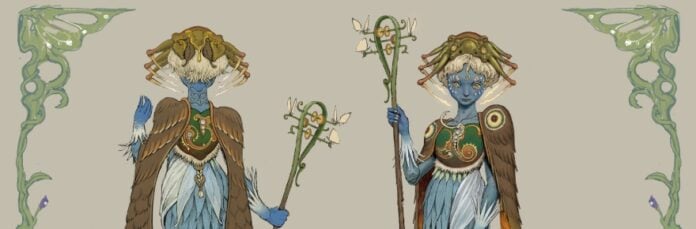
This was the expansion that really explored the Dunlanding clans and culture, with some tribes being allied to Saruman and some opposing the wizard. The epic volume introduced us to a new fellowship that would travel with us for a couple expansions — including the feisty Dunlander Nora and the mysterious Rohirrim Horn.
This expansion contained one of the most memorable story beats in the entire epic — at least in my opinion. There comes a point where the player is fully betrayed and then sent to labor in the pits under Isengard. This isn’t a quick instance; it’s a fairly long bout of captivity in which the player is forced to do menial tasks, grow familiar with the prison setting, and look for opportunities to break out. It’s a wonderfully staged bit of storytelling and a highlight of the expansion.
Saruman was a good villain to feature here, although the average non-raiding player doesn’t get to encounter him very often. Instead, his presence is felt and his name is dropped plenty of times all over the place.
Rise of Isengard’s expansion cycle continued well into 2012, with instances, a raid, a revamp of part of Moria, and the introduction of the Great River zone as an epilogue to Isengard and a prologue to Rohan.
I feel that Rise of Isengard is one of those expansions not many people think about unless it’s thrust in front of their faces. The next expansion dwarfed it in many ways, and the focus on the tribes took the players away from touching base with Sam, Frodo, and the rest of the “main” characters.
 Every two weeks, the LOTRO Legendarium goes on an adventure (horrid things, those) through the wondrous, terrifying, inspiring, and, well, legendary online world of Middle-earth. Justin has been playing LOTRO since its launch in 2007! If you have a topic for the column, send it to him at justin@massivelyop.com.